
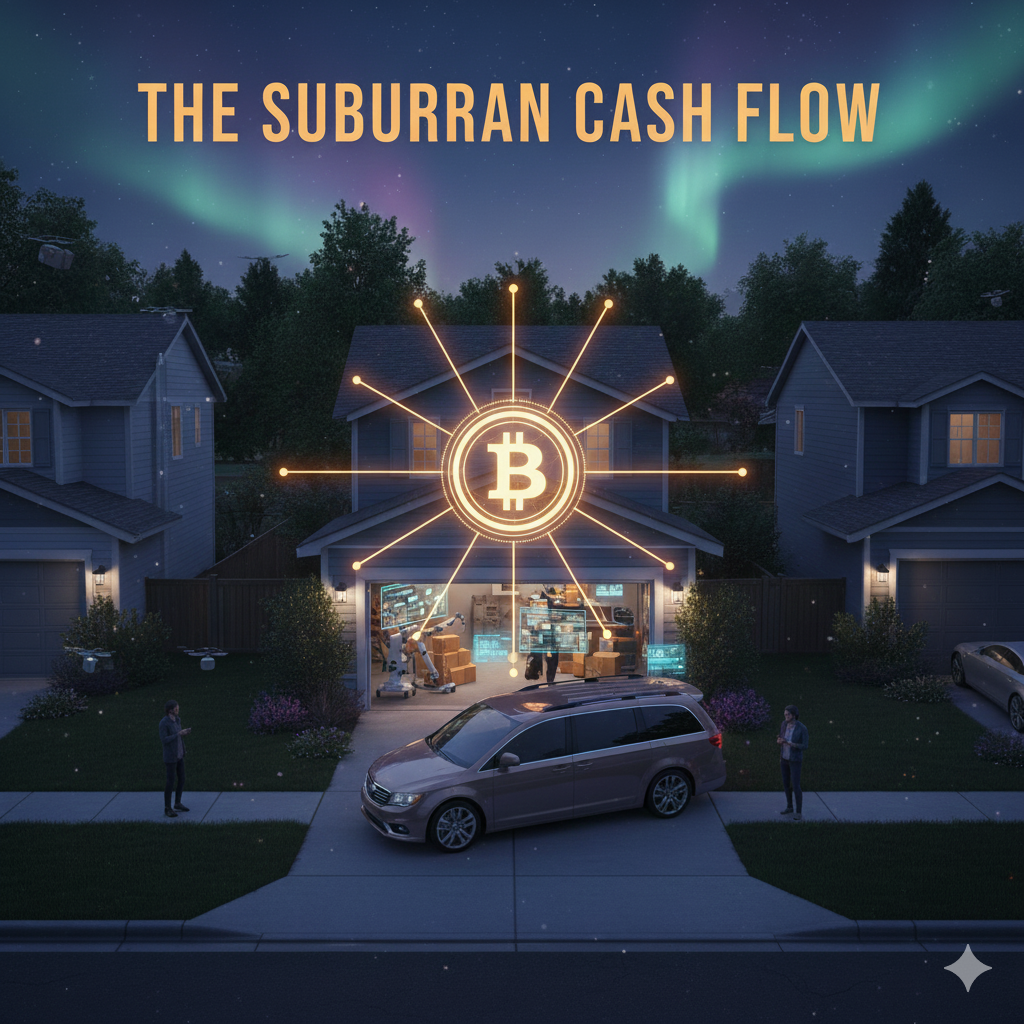
The modern American suburb is often criticized as a landscape of consumption—a place where families move to spend money, commute long hours, and accumulate liabilities. We look at the oversized garage filled with unused sporting equipment and the late-model minivan sitting idle in the driveway as symbols of domestic life. However, from a strictly economic perspective, these are not just conveniences; they are underutilized capital assets.
For the savvy homeowner, the suburb is not a money pit; it is a logistics hub waiting to be activated. The key to unlocking “Suburban Cash Flow” lies in a fundamental shift in mindset. You must stop viewing your home solely as a residence and your vehicle solely as transportation. Instead, view them as the infrastructure for a micro-enterprise. By leveraging the specific characteristics of the suburbs—space, safety, and a dense population of busy families—you can build recurring, high-margin income streams that operate on your schedule.
Here is how to apply the principles of asset management to your domestic life, turning your garage and your vehicle into autonomous earning machines.
The Square Footage Asset: Decentralized Storage and Fulfillment
Real estate is expensive. In the city, commercial storage and warehousing costs are skyrocketing, squeezing the margins of small business owners and e-commerce entrepreneurs. This creates a massive arbitrage opportunity for the suburban resident with an empty garage or a dry basement.
We are witnessing the rise of Peer-to-Peer Storage, a model that disrupts the traditional $40 billion self-storage industry. Your garage is essentially a micro-warehouse. By listing this space on platforms that handle the legal contracts and payments, you provide a solution for neighbors who are downsizing, renovating, or need winter storage for a boat. Unlike a commercial facility, you have low overhead—no staff, no separate property tax, and no commercial utilities. This allows you to offer competitive rates while pocketing nearly 100% of the profit. It is a passive yield on a property you are already paying for.
For the more active entrepreneur, this space can evolve into a Micro-Fulfillment Center. Many online sellers live in cramped city apartments but sell to suburban customers. By converting a section of your garage into a secure inventory hub, you can offer “local warehousing.” You hold the stock and handle the “pick and pack” process for a local brand. This integrates perfectly into the gig economy; you charge a monthly shelf fee plus a handling fee per item. With the rise of crypto payments in e-commerce, offering to settle these B2B invoices in stablecoins (like USDC) can attract forward-thinking tech brands looking for fast, borderless transactions, positioning your garage as a modern FinTech node.
The Logistics Vessel: The Minivan as a Secure Transport
The minivan is often mocked as the “mom-mobile,” but in the logistics world, it is a formidable asset. It offers significant cargo volume, lockable security (unlike a pickup truck), and a perception of safety that is invaluable.
The mistake most people make is using this asset for low-value work like food delivery or basic ride-sharing, where margins are eaten alive by depreciation and gas. The smart money is in High-Value Courier Services. Think about the needs of your area: interior designers moving expensive lamps, lawyers moving sensitive physical files, or galleries moving art. These clients do not trust a random sedan; they trust a professional driver with a secure, spacious vehicle. By charging a flat “white glove” fee rather than an hourly rate, you are paid for the reliability and insurance you provide, not just the miles you drive.
Furthermore, the suburbs face a perpetual “Last Mile” problem regarding childcare. Parents are drowning in logistical conflicts—school pickups, soccer practices, and music lessons often happen exactly when parents are working. A dedicated Subscription Shuttle Service for a specific neighborhood or school district solves this. Unlike a taxi service, this is a recurring revenue model. Parents pay a monthly retainer for a guaranteed seat in your vehicle. Because you are serving a tight geographic loop, your fuel costs remain low while your revenue becomes predictable—the holy grail of financial planning.
The Tech Edge: Drone Intelligence and Digital Trust
As we layer technology onto the suburban landscape, the opportunities become even more sophisticated. Real estate is the primary obsession of the suburbs, and listings require constant visual content.
This is where Drone Photography transitions from a hobby to a high-margin service. Real estate agents, roofing contractors, and solar installers need high-resolution aerial data. They need to see the condition of a roof or the layout of a landscape without climbing a ladder. Obtaining a Part 107 drone license allows you to provide this data legally. However, you can elevate this service by integrating Blockchain Technology. In an era of deep-fakes and AI-generated images, proving the authenticity of a photo is becoming crucial for insurance and high-end real estate. By embedding the metadata of your aerial shots into a Non-Fungible Token (NFT) or a blockchain ledger, you provide the client with immutable proof of the image’s date, location, and ownership. You aren’t just selling a photo; you are selling digital verification.
The Arbitrage of Expertise: Management and Coaching
Finally, we must look at the human capital of the suburbs. Your neighbors are likely dual-income professionals who are “time-poor” but “cash-rich.” They are often excellent at making money but terrible at managing it or maintaining their homes.
This creates a market for Home Maintenance Coordination. Homeowners hate the friction of finding a plumber, a landscaper, or a gutter cleaner. They don’t want to make ten phone calls; they want to make one. By positioning yourself as the “House Manager,” you vet and schedule these vendors, charging a management percentage on top of the invoice. You are essentially the General Contractor for their domestic life. You don’t mow the lawn; you ensure the lawn gets mowed.
Similarly, there is a massive gap in Financial Literacy. Many high-earning suburbanites are paralyzed by the complexity of 529 college savings plans, mortgage refinancing, or understanding the basics of an ETF portfolio. If you have a background in finance or a deep personal understanding of these tools, Financial Coaching is a lucrative avenue. Unlike a financial advisor who manages assets for a percentage, a coach teaches the system. You charge a package fee to help a family set up their budget, automate their savings, and understand the mechanics of their investments. You provide the education they should have received in school but didn’t.
The Equity Mindset
The transition from suburban resident to suburban operator is subtle but powerful. It requires looking at a driveway and seeing a rental slot, looking at a minivan and seeing a logistics fleet, and looking at a neighbor and seeing a potential client.
By integrating these strategies, you stop bleeding cash into your lifestyle and start extracting liquidity from it. You turn the liabilities of homeownership into the assets of a diversified, resilient personal economy.