

The accounting profession is built on a paradox. You are the custodian of the language of business. You understand the difference between profit and cash flow, the nuances of tax liability, and the levers of EBITDA. Yet, despite possessing this high-value intellectual property, most accountants remain trapped in a linear financial model: the billable hour.
Whether you are an auditor at a Big 4 firm or a tax preparer at a boutique practice, your income is historically capped by your physical capacity to work. You trade minutes for dollars. When the “busy season” ends, so does the surge pricing.
The most successful CPAs in 2026 are those who have stopped viewing themselves as service providers and started viewing themselves as Asset Managers. By productizing your knowledge and leveraging the “Fractional” economy, you can build revenue streams that are decoupled from your timesheet.
Here is a strategic analysis of how to transform your CPA license from a job requirement into a wealth-generating platform.
The Productization of Clarity: Excel as Intellectual Property
Every accountant has a folder of “super-spreadsheets.” These are the complex, macro-enabled models you built to track inventory for a manufacturing client or to forecast cash flow for a startup. You view them as tools of the trade. The market views them as Intellectual Property.
Small business owners are desperate for financial clarity but cannot afford a $5,000 consulting engagement. They are currently buying generic, poorly designed templates from Etsy and Gumroad.
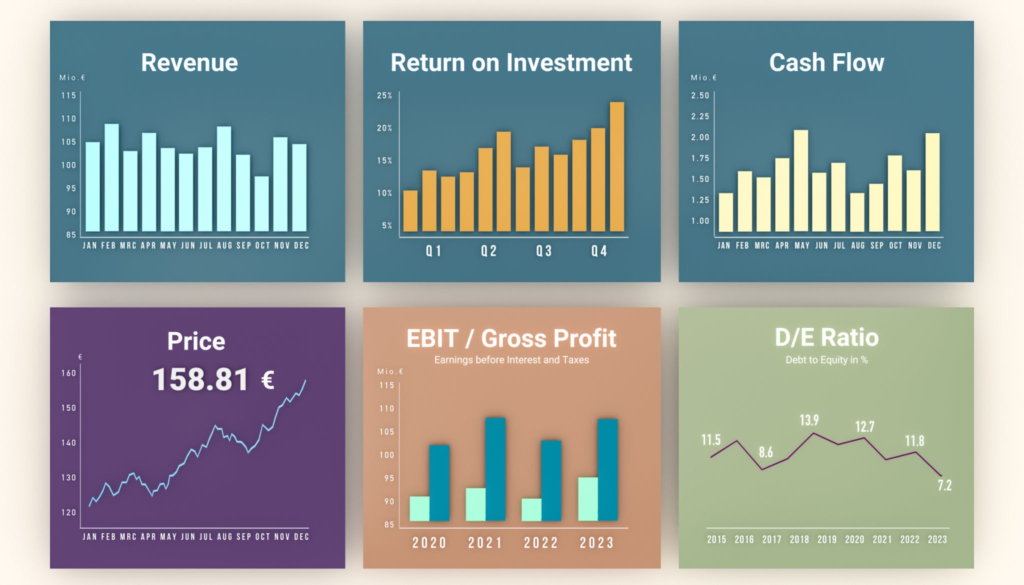
There is a massive arbitrage opportunity here. By packaging your internal tools—such as a “SaaS Unit Economics Tracker,” a “Real Estate Syndicate Waterfall Model,” or a “Construction Job Costing Sheet”—you create a digital product with zero marginal cost. A well-designed financial model selling for $49 can generate passive revenue indefinitely. You build it once, and it sells while you sleep. The key is Niche Specificity. Do not sell a “Budget Template.” Sell a “Cash Flow Forecast for Shopify Sellers.”
This logic extends to Asynchronous Education. The intersection of accounting and software is a pain point for millions. A video course on “Mastering QuickBooks Online for Contractors” or “Navigating the 2026 Crypto Tax Changes” allows you to teach a concept once and sell it to thousands. Platforms like Teachable or Udemy handle the logistics, allowing you to monetize your expertise without scheduling a single Zoom call.
The Strategic Pivot: The Fractional CFO
The “Fractional” executive model is the single biggest lever for increasing your effective hourly rate. Startups and mid-market companies (Series A/B) have complex financial needs—raising capital, managing burn rate, and board reporting—but they do not need (and cannot afford) a full-time CFO with a $250,000 salary.
This is where you step in. As a Fractional CFO, you offer high-level strategy for a monthly retainer. You are not doing the bookkeeping; you are analyzing the books to tell the CEO where to steer the ship.
Market rates for Fractional CFO services currently range from $250 to $450 per hour, often structured as a retainer of $3,000 to $8,000 per month for just 10-15 hours of work. By managing four of these clients, you can exceed a typical partner salary while working half the hours. The value you provide is not in the transaction processing, but in the interpretation of the data. You are selling confidence to the CEO.
The Technical Niche: Crypto & ERP Implementation
The regulatory environment is shifting rapidly, creating new markets for specialized compliance. Nowhere is this more evident than in Cryptocurrency Taxation. With new reporting frameworks (like CARF and expanded IRS scrutiny) coming online in 2026, the demand for accountants who understand DeFi, staking, and wash-sale rules is exploding.
Generalist CPAs are terrified of these audits. By positioning yourself as a Crypto Reconciliation Specialist, you can charge premium consulting rates to clean up messy blockchains for high-net-worth traders. This is high-friction work that commands “hazard pay.”
Similarly, the ERP Implementation market is underserved. Small businesses are constantly migrating from spreadsheets to NetSuite, Sage, or Xero. They rarely do it correctly. A “System Architect” side hustle—where you oversee the migration, set up the Chart of Accounts correctly from day one, and train the staff—is a high-value project. You are selling the prevention of future technical debt.
The Authority Premium: Technical Writing
Finally, never underestimate the value of your signature. The internet is flooded with AI-generated financial advice that is often dangerously inaccurate. FinTech companies, banks, and software vendors pay a premium for Subject Matter Experts (SMEs) who can write with authority.
Freelance technical writing in the accounting sector—white papers on FASB changes, case studies on tax strategy, or guides on audit readiness—pays significantly better than general copywriting. Rates of $0.50 to $1.00 per word are common for writers who can cite the Internal Revenue Code correctly. This is flexible, quiet work that builds your personal brand while padding your bank account.
The Balance Sheet of Life
The transition from “Accountant” to “Financial Entrepreneur” is psychological. You must stop valuing your work by the hour and start valuing it by the impact.
Whether you are selling a template that saves a business owner ten hours of frustration, or providing the strategic insight that helps a startup raise its next round of funding, you are generating massive value. It is time your personal P&L reflected that reality.